Septic Tank Pumping in Clovis, CA
Septic tank pumping service in Clovis, CA. We remove sludge and scum, check tank levels, and keep your system flowing through dry summers and wet winters.
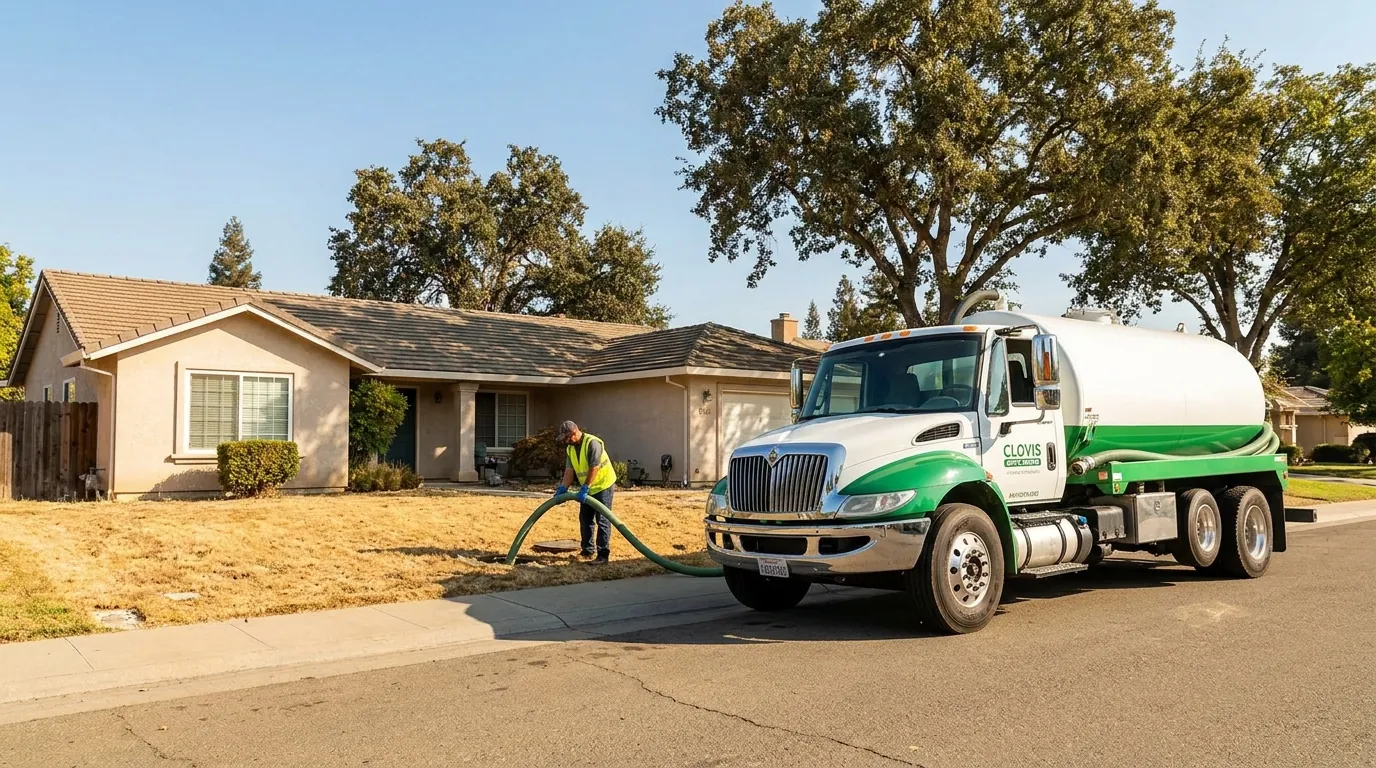
Why regular pumping matters here
Every septic tank slowly fills with two layers that water can't carry away: a scum layer of grease and lighter solids floating on top, and a sludge layer of heavier solids settling at the bottom. Between them sits the relatively clear liquid that flows out to your drain field. When the sludge and scum grow too thick, that clear zone shrinks, solids start escaping toward the drain field, and the whole system moves closer to a backup. Pumping is the routine that resets the tank before that happens.
In Clovis, the timing of that routine is shaped by local ground. Homes on tighter clay soils drain more slowly, which means the drain field is less forgiving of any solids that slip past a neglected tank — so staying ahead of pumping matters more, not less. Homes on sandier, faster-draining lots get more margin from the soil but still need the tank emptied on schedule, because a fast field can't fix a tank that's overflowing with sludge.
Our septic tank pumping service covers the full removal: we locate and open the access lids, measure the sludge and scum so you know where your tank actually stands, and vacuum the tank down to the bottom rather than skimming the liquid off the top. A quick look at the baffles and inlet while the tank is open often catches small problems early. If we spot signs of trouble, we'll point you toward a full septic system inspection or, if odors and slow drains are already involved, a deeper septic tank cleaning.
What a pumping visit involves
A standard pumping call follows the same careful sequence every time.
-
Locate and open access
We find the tank and expose the lids or risers. If access is buried, we dig down to the ports. Homes with risers at grade save time and dig cost on every future visit.
-
Measure sludge and scum
Before pumping, we gauge how deep the solid layers are. That reading tells you whether your current interval is right or whether the tank is filling faster than expected.
-
Pump the tank fully
We vacuum both the scum and the sludge down to the tank floor, working the hose across compartments so nothing is left behind to shorten the next interval.
-
Check baffles and flow
With the tank empty, we inspect the inlet and outlet baffles and watch how water returns from the house, noting anything that suggests a partial blockage or a struggling drain field.
-
Reseal and advise
We reseat the lids, backfill any dig, and give you a plain-language recommendation on when to schedule the next visit based on what we measured.
Ready to schedule pumping?
Tell us your household size and roughly when your tank was last pumped, and we'll help you set a sensible date.
Serving Clovis and nearby communities including Sunnyside, Fresno, and Sanger.
Frequently asked questions
How often should I pump my septic tank in Clovis?
Most Clovis households land somewhere between every three and five years, but the right interval depends on tank size, how many people live in the home, and how heavily the system is used. Measuring sludge at each visit is the most reliable way to dial in your own schedule.
Do you pump the whole tank or just the top?
We vacuum both layers all the way down to the tank floor, not just the liquid off the top. Skimming the top leaves the sludge behind and shortens the time until your next backup, so a full pump-out is always the goal.
What drives the cost of septic tank pumping?
Tank size, how much sludge has accumulated, how easy the lids are to reach, and whether risers are installed all affect the price. A buried tank that needs digging costs more than one with lids at grade.
Will pumping fix my slow drains?
Often, yes — if the tank was overfull and solids were backing up the system, pumping restores flow. If drains stay slow afterward, the issue may be in the drain field or plumbing, and a septic system inspection can pinpoint it.
Can you pump if my access lids are buried?
Yes. We locate the tank and dig down to the ports. If your lids are chronically buried, we can discuss adding risers so future pumping is quicker and less disruptive.