Drain Field Service in Clovis, CA
Drain field service in Clovis, CA. We diagnose soggy ground, slow drains, and failing leach fields, and explain how local soil affects your options.
Why the drain field matters most
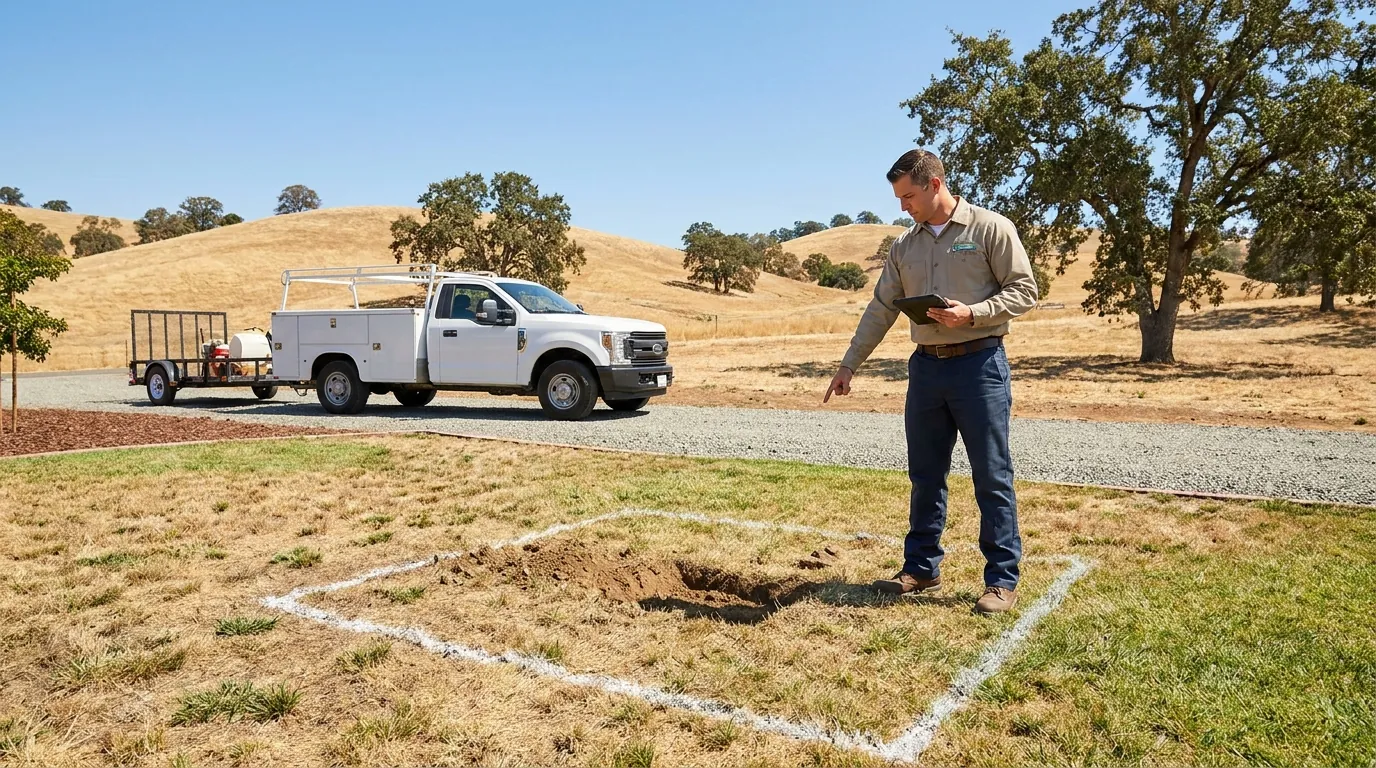
The drain field — also called the leach field — is where treated water from your tank soaks back into the soil. It's the hardest part of a septic system to replace and the most expensive when it fails, which makes it the part worth protecting. Most field failures don't happen overnight; they build slowly as solids clog the soil pores or as too much water overwhelms the ground's ability to absorb.
The warning signs show up above ground and inside the house: spongy or wet soil over the field, patches of unusually green grass, sewage odors outdoors, and drains throughout the home that slow down at the same time. In Clovis, soil type drives how a field behaves. Tighter clay soils absorb water slowly and stay saturated longer, so a field on clay is quicker to show stress. Sandier soils drain faster but offer less natural filtration. Either way, the field's capacity is finite, and the biggest thing that shortens its life is letting solids from an overfull tank reach it.
That's why field care starts upstream. Keeping the tank on a sound septic tank pumping schedule is the single best thing you can do for the field, and a septic system inspection can tell you whether a struggling field is recoverable or headed toward replacement. We assess the field, identify what's driving the problem, and give you an honest picture of the options.
How we approach a drain field
Field problems trace back to a cause — we start there.
-
Confirm the symptoms
We walk the field looking for wet spots, odors, and telltale grass patterns, and check how drains behave inside the house to gauge how far the problem has progressed.
-
Check the tank first
Because an overfull tank sending solids downstream is a leading cause of field trouble, we verify the tank's condition and level before blaming the soil.
-
Assess absorption
We evaluate whether water is leaving the tank and soaking in, or backing up because the field can no longer accept it — a key distinction for what comes next.
-
Explain the options
Depending on the cause, options range from correcting an upstream tank problem and resting the field to more involved work. We explain each in plain terms with no upsell.
-
Set a protection plan
We recommend water-use habits and a service schedule that reduce load on the field and extend the life you have left in it.
Worried about your drain field?
If your yard is soggy over the field or drains are slowing across the house, get it looked at before the problem spreads.
Drain field assessments throughout Clovis and nearby communities.
Frequently asked questions
What are the first signs of a failing drain field?
Wet or spongy ground over the field, unusually lush grass in strips, outdoor sewage odors, and slow drains throughout the house are the common early signs. Catching them early gives you more options than waiting until effluent pools at the surface.
Can a drain field be saved once it's struggling?
Sometimes. If the cause is an overfull tank sending solids downstream, correcting that and resting the field can help. If the soil pores are heavily clogged, the field may be near the end of its life — an inspection helps tell the difference.
How does Clovis soil affect my drain field?
Clay-heavy soils absorb slowly and stay saturated longer, so fields on clay show stress sooner, while sandy soils drain fast but filter less. Knowing your soil helps set realistic expectations for how the field will age and how much water it can handle.
How do I protect my drain field?
Keep the tank pumped on schedule so solids never reach the field, spread out heavy water use, and keep vehicles and heavy structures off the field area. These habits do more to extend field life than anything else.