Grease Trap Pumping in Clovis, CA
Grease trap pumping in Clovis, CA for restaurants and kitchens. We remove grease and solids to keep lines flowing and odors down. Schedule regular service.
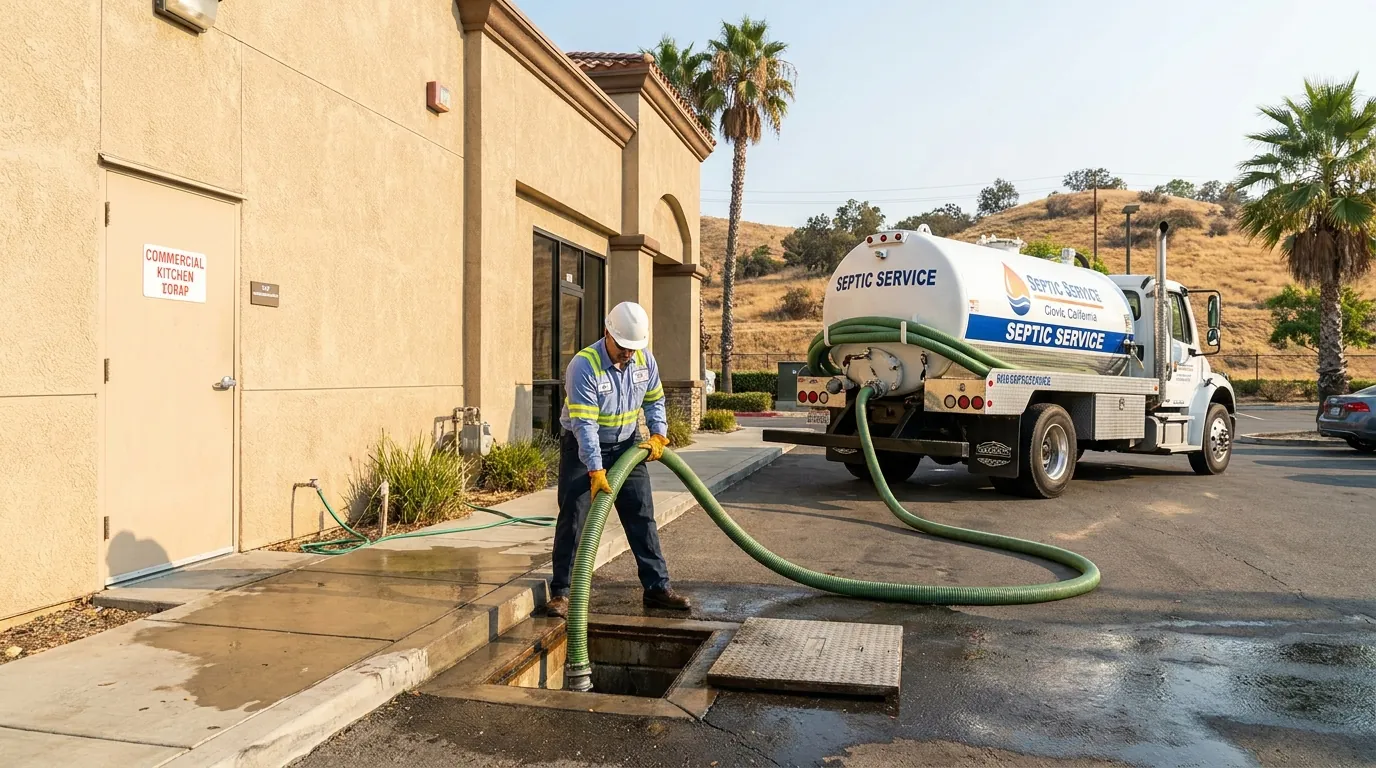
Why grease traps need regular service
A grease trap does one job: it slows kitchen wastewater long enough for fats, oils, and grease to cool and float while food solids sink, so only cleaner water continues into the drain or septic system. Over time the grease layer thickens and the solids build, and once the trap fills past its working capacity, grease starts riding through into the plumbing — where it hardens, narrows lines, and eventually blocks them. Regular pumping keeps the trap doing its job.
The signs a trap is overdue are hard to miss in a working kitchen: strong odors near the trap, slow floor and sink drains, and grease showing up where it shouldn't. Letting a trap go too long risks a line clog at the worst possible time — mid-service — and the cleanup costs far more than routine pumping would have. For kitchens on septic, an overloaded trap also pushes grease toward the tank and field, where it causes the same clogging problems on a larger scale.
We pump the trap fully, scraping the grease cap and settled solids rather than skimming the liquid, and we can set you up on a schedule matched to your kitchen's volume. Kitchens tied into a septic system benefit from pairing trap service with regular septic tank pumping, and if grease has already reached the tank, a full septic tank cleaning may be the reset your system needs.
How grease trap pumping works
A complete pump-out, not a skim.
-
Open and assess
We open the trap and check the depth of the grease cap and the solids, which tells us how your current schedule is holding up.
-
Remove grease and solids
We pump out the full contents — floating grease, trapped water, and settled food solids — so the trap starts fresh.
-
Scrape the walls and baffles
We scrape hardened grease off the walls and baffles, where buildup that a simple pump misses would otherwise cut into capacity.
-
Check the trap condition
With the trap empty we look at baffles and seals, since a damaged baffle lets grease pass straight through and defeats the trap's purpose.
-
Set a service interval
We recommend a pumping frequency based on your kitchen's volume and menu, so the trap never fills to the point of pushing grease downstream.
Keep your kitchen running clean
Tell us about your kitchen's volume and we'll help you set a grease trap pumping schedule that keeps lines clear.
Grease trap service for kitchens in Clovis and nearby towns.
Frequently asked questions
How often should a grease trap be pumped?
It depends on the trap's size and how much grease your kitchen produces, but many kitchens fall into a monthly to quarterly range. A common rule of thumb is to service the trap before the grease and solids reach about a quarter of its depth.
What happens if I wait too long?
An overfull trap lets grease pass into the plumbing, where it hardens and clogs lines — often mid-service, when a shutdown is most costly. Regular pumping is far cheaper than an emergency clog and cleanup.
Do you scrape the trap or just pump it?
We pump the full contents and scrape hardened grease off the walls and baffles. Skimming the liquid off the top leaves buildup that quickly cuts into the trap's capacity.
My kitchen is on septic — does that change anything?
Yes. Grease that gets past an overloaded trap heads into your septic tank and drain field, where it causes the same clogging on a larger scale. Keeping the trap serviced protects the whole system, and pairing it with regular tank pumping helps.