Septic System Inspection in Clovis, CA
Septic system inspection in Clovis, CA. We check tank, baffles, and drain field to find problems early and guide septic system repair decisions.
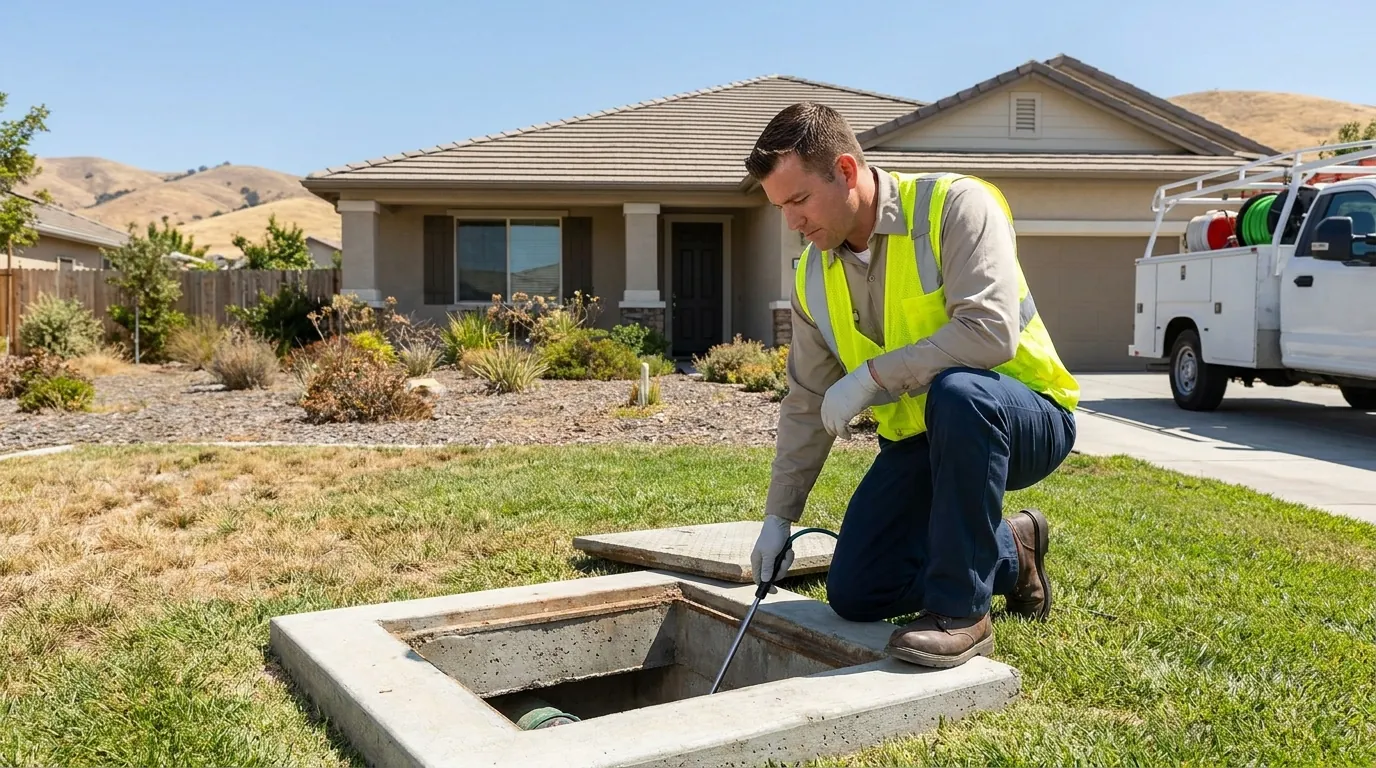
What an inspection tells you
A septic system inspection answers the questions pumping alone can't: Is the tank structurally sound? Are the baffles doing their job? Is water actually leaving the tank and soaking into the drain field the way it should? Whether you're buying a home, noticing slow drains, or just haven't had eyes on the system in years, an inspection turns guesswork into a plan.
We look at the whole path water takes. Inside the tank we check the inlet and outlet baffles — the parts that keep scum from escaping toward the field — and note sludge depth, corrosion, and any cracks. Then we assess how the drain field is holding up, watching for soggy ground, standing effluent, or slow return that signals the soil is no longer absorbing well. Clovis lots vary from tight clay to sandy loam, and that soil difference changes how a field ages and what a struggling one looks like.
When an inspection turns up a problem, we lay out the options in plain terms — sometimes it's a simple baffle fix, sometimes it points to a larger septic system repair. If the tank is overdue, we'll usually recommend pairing the inspection with septic tank pumping so the tank can be seen empty. If the field itself is failing, our drain field service is the next step.
How we inspect a system
A thorough inspection follows the water from house to field.
-
Review the system layout
We locate the tank, access ports, and drain field, and note the tank size and configuration so the rest of the inspection has context.
-
Open and assess the tank
We measure sludge and scum, check the tank walls and lid for cracks, and confirm the water level sits where it should — not too high, which suggests a backed-up field.
-
Inspect the baffles
We examine the inlet and outlet baffles for damage or missing pieces. A failed outlet baffle lets solids reach the field, one of the most common causes of premature field failure.
-
Evaluate the drain field
We check the ground over the field for wet spots, odors, and lush strips of grass, and note how water returns from the house — signs of whether the soil is still absorbing effluent.
-
Report and recommend
You get a straightforward summary of what's working, what's worn, and what needs attention now versus later, with no pressure to do more than the system requires.
Book an inspection
Buying, selling, or just unsure about your system? An inspection gives you the facts before you decide anything.
Inspections available across Clovis and nearby towns.
Frequently asked questions
When should I get a septic inspection?
Before buying a home with a septic system, after unexplained slow drains or odors, and periodically if it's been years since anyone assessed the system. Catching a worn baffle or an early field problem is far cheaper than repairing the damage it causes.
Is an inspection the same as pumping?
No. Pumping empties the tank; an inspection evaluates the tank's condition, the baffles, and the drain field. They pair well, though — an empty tank is easier to inspect thoroughly.
What problems commonly turn up?
Failed outlet baffles, cracked lids or tank walls, overfull tanks, and drain fields that no longer absorb effectively are among the most common findings. Each has a different path to septic system repair, which we'll explain clearly.
Can an inspection prevent a backup?
Often, yes. Many backups build slowly from a problem an inspection would have caught — a solids-clogged field, a broken baffle, or a tank long overdue for pumping — so an inspection is one of the better ways to avoid a surprise.